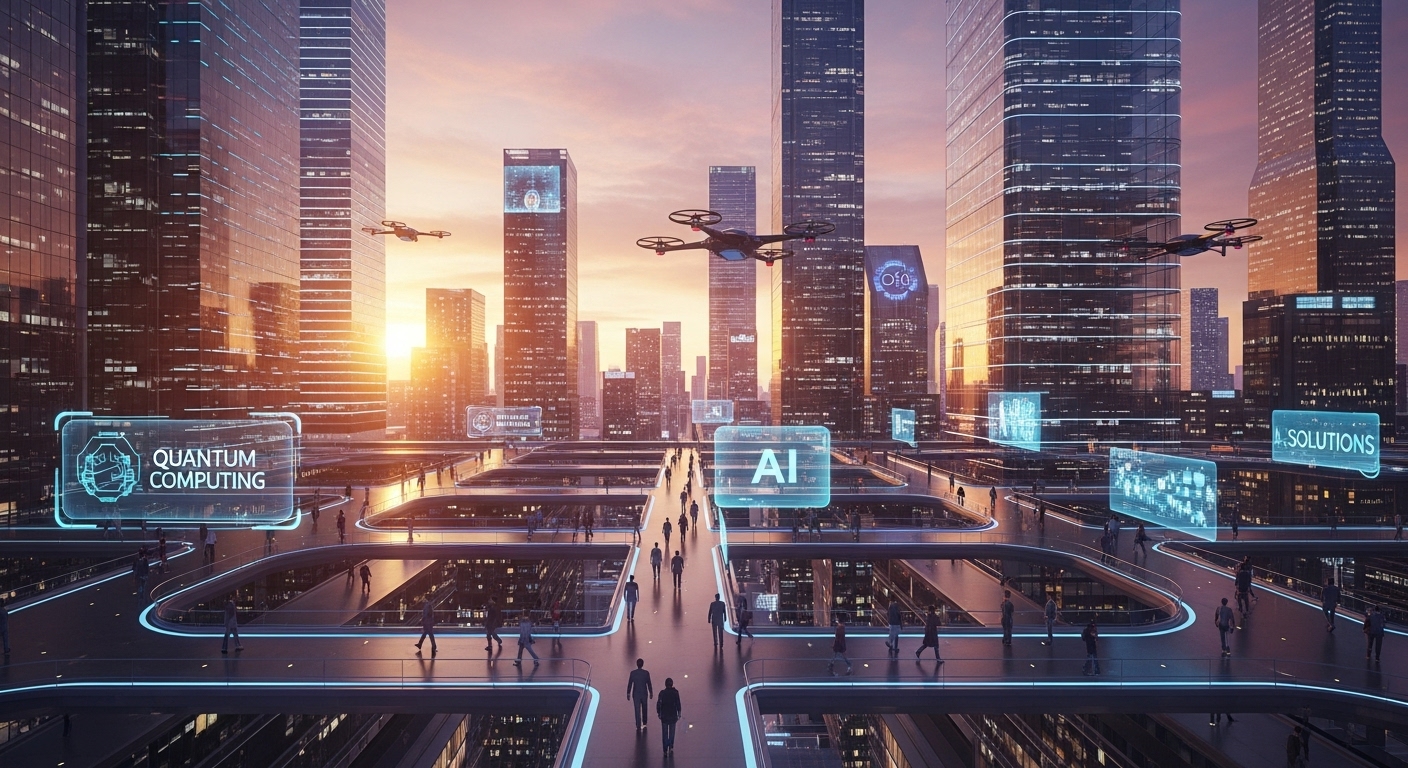
Technology has always been a catalyst for change, but in the past few years, the pace of innovation has accelerated to an unprecedented level. From artificial intelligence to blockchain, quantum computing to augmented reality, these emerging technologies are reshaping the way we live, work, and interact with the world. This blog explores the most significant technological trends, their benefits, and the challenges they bring.
Artificial Intelligence: The Smart Engine of Modern Life
Artificial Intelligence, or AI, is no longer confined to science fiction. It has become an integral part of our daily lives, powering everything from virtual assistants and recommendation systems to self-driving cars and advanced medical diagnostics. Unlike traditional software, AI can analyze data, learn from patterns, and make decisions, enabling automation and efficiency at a scale never seen before.
In healthcare, AI algorithms assist in diagnosing diseases, predicting patient outcomes, and personalizing treatment plans. In finance, AI detects fraudulent transactions in real-time and helps optimize investment strategies. Retail companies leverage AI to personalize shopping experiences, enhancing customer satisfaction and driving sales.
Despite its many advantages, AI presents significant ethical and societal challenges. Issues such as algorithmic bias, data privacy, and potential job displacement must be addressed carefully. Organizations and policymakers need to establish regulations and ethical frameworks to ensure AI benefits society while minimizing risks.
Quantum Computing: Redefining the Boundaries of Possibility
Quantum computing represents a revolutionary leap in computing power. While traditional computers use bits as the basic unit of information, quantum computers use qubits, which can exist in multiple states simultaneously. This property allows them to perform highly complex calculations at speeds far beyond the capabilities of classical machines.
Quantum computing has the potential to transform industries such as medicine, logistics, cryptography, and materials science. For example, it can simulate molecular interactions to accelerate drug discovery, optimize supply chains in real-time, and develop unbreakable encryption techniques.
However, quantum technology is still in its infancy. Building stable and error-free quantum computers remains a significant challenge, but research and development are progressing rapidly. As the technology matures, it is expected to unlock solutions to problems that are currently beyond our reach.
Internet of Things: Connecting the World Around Us
The Internet of Things, or IoT, is a network of connected devices that communicate and share data in real-time. This technology enables smart homes, intelligent factories, and data-driven agriculture, creating unprecedented levels of efficiency and convenience.
In agriculture, IoT sensors monitor soil conditions, water usage, and crop health, allowing farmers to make precise, data-driven decisions. In urban areas, IoT devices help manage traffic, reduce energy consumption, and enhance public safety. Wearable devices and health monitors track vital signs and provide insights into personal well-being, improving healthcare outcomes.
IoT’s widespread adoption also raises important concerns about data security and privacy. Protecting connected devices from cyberattacks is critical, as vulnerabilities could lead to serious consequences for individuals and organizations alike.
Blockchain Technology: Beyond Digital Currency
Blockchain technology, often associated with cryptocurrencies, is much more than digital money. It is a decentralized, secure, and transparent ledger system that allows for reliable record-keeping and transactions across industries.
In supply chain management, blockchain ensures the authenticity of products and provides complete traceability. In healthcare, it facilitates the secure exchange of patient records between providers while maintaining privacy. Blockchain is also being explored for secure voting systems, digital identity verification, and intellectual property protection.
Despite its promise, blockchain faces challenges such as scalability, energy consumption, and regulatory hurdles. Overcoming these issues is essential for broader adoption and integration into mainstream applications.
Augmented Reality and Virtual Reality: Shaping New Experiences
Augmented Reality (AR) and Virtual Reality (VR) are transforming the way we interact with the world and access information. AR overlays digital elements on the real world, enhancing real-life experiences, while VR creates fully immersive digital environments.
In education, AR and VR allow students to explore complex concepts and historical events interactively. In healthcare, surgeons use AR to visualize patient anatomy during operations, increasing precision and safety. The real estate industry leverages VR to offer virtual property tours, enabling buyers to explore homes without physically visiting them.
As AR and VR technologies continue to advance, they have the potential to revolutionize training, remote work, entertainment, and social interactions, creating entirely new ways for people to experience and engage with digital content.
Renewable Energy and Smart Technologies: Paving the Way for Sustainability
The integration of technology and renewable energy is crucial in addressing climate change. Solar panels, wind turbines, and energy storage systems are becoming more efficient and affordable, while smart grids optimize energy distribution and consumption.
Electric vehicles are a key part of this transition, with advancements in battery technology and charging infrastructure making them more practical for everyday use. Artificial intelligence is also helping predict energy consumption patterns and optimize renewable energy production, reducing waste and environmental impact.
The combination of renewable energy and smart technology not only promotes environmental sustainability but also drives economic growth and innovation, creating new opportunities in multiple sectors.
Cybersecurity: Protecting the Digital Ecosystem
As technology becomes increasingly central to modern life, cybersecurity has emerged as a critical priority. Cyberattacks are growing in frequency and sophistication, targeting individuals, businesses, and governments alike.
AI and machine learning are being leveraged to detect threats in real-time, identify anomalies, and respond to attacks proactively. Encryption, multi-factor authentication, and blockchain solutions help secure sensitive information and maintain trust. However, technology alone cannot ensure security; human awareness and vigilance remain equally important.
Building a secure digital ecosystem is essential not only for protecting data and infrastructure but also for ensuring public confidence in technology and its applications.
Ethical Considerations and Social Impact of Technology
Technological advancements bring ethical and social challenges that require careful thought. AI bias, unequal access to technology, privacy concerns, and workforce displacement are pressing issues that need attention.
Developing ethical frameworks, implementing policies, and promoting digital literacy are crucial steps in ensuring that technology serves humanity equitably. Innovation must be guided by human-centered principles to create a world where technology enhances life rather than creating disparities.
The Road Ahead: Embracing Change Responsibly
We are living in a period of rapid technological transformation. AI, quantum computing, IoT, blockchain, AR, VR, and renewable energy are redefining industries, improving efficiency, and expanding human potential. However, with great power comes great responsibility.
The future of technology depends on our ability to balance innovation with ethics, security, and sustainability. By thoughtfully integrating these advancements into society, we can unlock new possibilities, improve quality of life, and create a more connected and resilient world.
Technology is not just a tool—it is the foundation of a future where imagination and innovation converge. Those who embrace and guide these changes responsibly will shape a world of endless possibilities, where human creativity and technological progress work hand in hand.