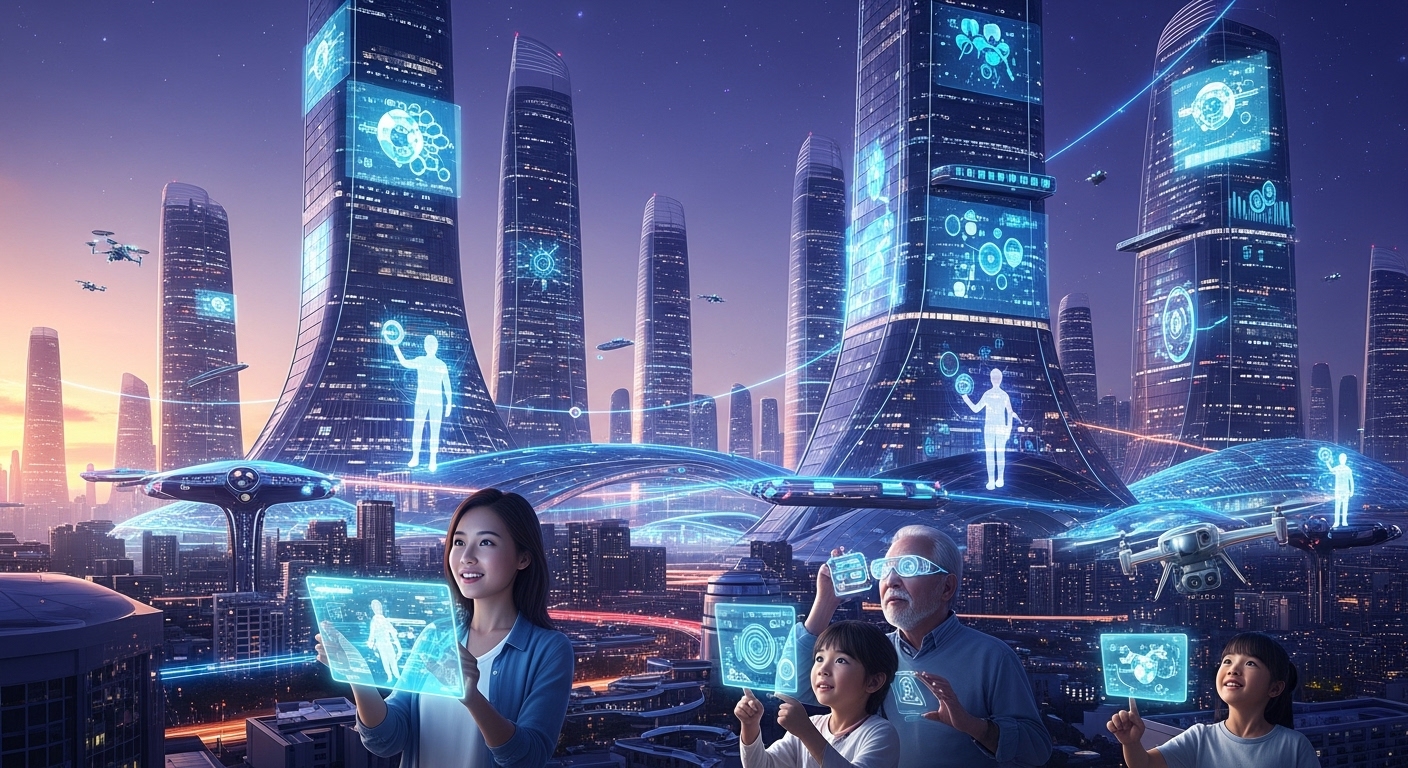
Technology has always been a catalyst for change, driving progress across industries, societies, and individual lives. From the earliest mechanical tools to the digital revolution of the 21st century, humanity has relied on innovation to expand its capabilities. Today, technological advancements are occurring at an unprecedented pace, touching every aspect of daily life and business. This blog post explores the key areas of modern technology, their impact, challenges, and the future possibilities they present.
The Era of Artificial Intelligence
Artificial Intelligence (AI) has emerged as one of the most significant technological revolutions of our time. AI refers to the development of machines capable of performing tasks that traditionally require human intelligence, such as decision-making, language understanding, and pattern recognition.
Machine learning, a subset of AI, enables systems to learn from data and improve over time without explicit programming. This capability has transformed sectors like healthcare, finance, education, and retail. In healthcare, AI algorithms assist in diagnosing diseases, analyzing medical images, and predicting patient outcomes with remarkable accuracy. In finance, AI helps detect fraudulent transactions, optimize investment portfolios, and provide personalized banking experiences.
AI-driven automation is reshaping the workforce. Repetitive and mundane tasks, once handled by humans, are increasingly managed by intelligent systems, freeing up employees for more creative and strategic work. However, this shift also raises concerns about job displacement and the need for reskilling workers to thrive in an AI-driven economy.
Ethical considerations surrounding AI are gaining attention. Bias in AI algorithms, privacy concerns, and accountability for automated decisions are critical challenges that must be addressed. Responsible AI development, transparency, and ethical guidelines are essential to ensure AI benefits society without causing harm.
Quantum Computing: A New Dimension of Computation
Quantum computing represents a groundbreaking leap beyond traditional computing. Unlike classical computers, which rely on bits representing 0 or 1, quantum computers use qubits that can exist in multiple states simultaneously. This unique property allows them to perform complex calculations at unprecedented speeds.
Quantum computing has the potential to revolutionize various fields. In medicine, it could simulate molecular interactions for drug discovery, enabling faster development of life-saving treatments. In logistics and transportation, quantum algorithms could optimize routes and supply chains with unparalleled efficiency. Cryptography and cybersecurity will also be transformed, as quantum computers can break conventional encryption but also enable unbreakable quantum encryption.
Despite its promise, quantum computing faces challenges. Maintaining qubit stability, error correction, and scalability are significant technical hurdles. Nevertheless, research continues at a rapid pace, and within the coming decades, quantum computing may redefine industries and solve problems previously thought impossible.
Internet of Things: Connecting Every Corner of Life
The Internet of Things (IoT) refers to the network of interconnected devices that communicate with each other and share data in real time. IoT devices range from smart home appliances and wearable technology to industrial sensors and connected vehicles.
In everyday life, IoT enhances convenience and efficiency. Smart home systems control lighting, temperature, and security, learning user preferences to optimize energy consumption. Wearable devices monitor health metrics like heart rate, sleep patterns, and activity levels, empowering individuals to make informed lifestyle choices.
In industry, IoT is transforming manufacturing, agriculture, and logistics. Sensors in factories monitor machinery performance and predict maintenance needs, reducing downtime. In agriculture, IoT devices optimize irrigation, monitor soil conditions, and increase crop yields. In logistics, connected devices track shipments in real time, improving supply chain transparency and efficiency.
However, IoT expansion comes with challenges. Security and privacy risks are significant, as interconnected devices collect vast amounts of sensitive data. Protecting this information requires robust cybersecurity measures, encryption protocols, and user awareness.
Blockchain Technology: Redefining Trust
Blockchain technology is more than just the foundation for cryptocurrencies; it is a powerful tool for creating transparency, security, and trust in digital systems. Blockchain is a decentralized and distributed ledger that records transactions across multiple nodes, making it tamper-resistant and verifiable.
Blockchain applications extend far beyond finance. In supply chains, it ensures transparency and traceability, allowing consumers and businesses to verify the origin and authenticity of products. In healthcare, blockchain can secure patient records and enable safe sharing of medical data among providers. In governance, blockchain-based voting systems can enhance transparency and reduce the risk of fraud.
Despite its potential, blockchain faces challenges related to scalability, energy consumption, and regulatory compliance. Developing more energy-efficient consensus mechanisms and creating frameworks for legal and ethical use are essential for the widespread adoption of blockchain technology.
5G Technology: The Backbone of a Connected Future
The fifth generation of mobile network technology, 5G, promises to revolutionize connectivity. With higher speeds, lower latency, and greater capacity than previous networks, 5G enables real-time communication and supports a massive number of connected devices.
5G will have transformative effects across sectors. Autonomous vehicles require ultra-low latency to communicate safely with their environment. Smart cities rely on 5G to integrate IoT systems for traffic management, public safety, and resource optimization. Telemedicine benefits from high-speed, reliable connections for remote diagnostics and even remote surgery.
While the rollout of 5G is ongoing, challenges remain. Infrastructure development, high implementation costs, and public concerns about safety and privacy must be addressed to ensure smooth adoption. Nevertheless, 5G is poised to be a game-changer in connectivity, paving the way for innovations that were previously unimaginable.
The Ethical Dimensions of Technology
As technology advances at a rapid pace, ethical considerations become increasingly important. Technologies like AI, IoT, and blockchain offer immense benefits but also pose risks if misused or poorly regulated.
AI systems may unintentionally perpetuate bias present in training data, leading to unfair outcomes in areas like hiring, lending, or criminal justice. Privacy is a major concern, especially with IoT devices that continuously collect personal data. Blockchain technologies must address energy consumption and accessibility to avoid creating inequalities.
Developers, policymakers, and society as a whole must collaborate to establish ethical frameworks. This includes transparency in algorithmic decision-making, protecting personal data, reducing environmental impacts, and ensuring equitable access to technology. Ethics should not be an afterthought but a guiding principle in innovation.
The Future of Work in a Tech-Driven World
Technological advancements are reshaping the workplace. Automation, AI, and digital platforms are changing job roles, skill requirements, and business models. Routine and repetitive tasks are increasingly handled by machines, while humans focus on creativity, problem-solving, and decision-making.
Reskilling and upskilling the workforce are critical for adapting to these changes. Education systems and corporate training programs must evolve to prepare individuals for new roles in AI management, cybersecurity, data analysis, and digital strategy. The ability to learn continuously will become a defining skill in the future of work.
Remote work and digital collaboration tools have also gained prominence. Technologies like cloud computing, virtual meetings, and collaborative platforms allow teams to work effectively across geographies, reducing operational costs and expanding talent pools. The future of work is increasingly flexible, technology-driven, and globally connected.
Sustainability and Green Technology
As technology evolves, sustainability is becoming a central concern. Green technology focuses on minimizing environmental impact while driving innovation. Renewable energy solutions, energy-efficient devices, and sustainable manufacturing practices are critical areas of focus.
Electric vehicles, solar panels, and smart grids are transforming energy consumption patterns. Advanced materials and 3D printing are reducing waste in manufacturing. In computing, initiatives aim to develop energy-efficient data centers and algorithms to reduce the carbon footprint of digital operations.
Technology not only contributes to environmental challenges but also provides solutions. By integrating sustainable practices into innovation, society can harness technology to create a greener, more resilient future.
Embracing Change and Innovation
The pace of technological change can be overwhelming, but it is also full of opportunity. Businesses, governments, and individuals must remain agile, informed, and adaptable to thrive in this evolving landscape. Embracing emerging technologies responsibly can drive efficiency, creativity, and social progress.
Innovation is not solely about building new gadgets or systems; it is about solving real-world problems and improving the quality of life. Whether it is AI improving healthcare outcomes, IoT making cities smarter, or blockchain ensuring transparency, technology has the power to transform society for the better.
Conclusion
The world of technology is vast, dynamic, and filled with promise. From AI and quantum computing to IoT, blockchain, and 5G, the innovations of today are shaping the society of tomorrow. These technologies offer incredible potential, but they also come with ethical, social, and environmental responsibilities.
Navigating this landscape requires a balance of curiosity, knowledge, and responsibility. By understanding the benefits and challenges of modern technology, individuals and organizations can make informed decisions, leverage opportunities, and mitigate risks. The future is being written with every new technological breakthrough, and embracing this change with foresight and care will allow humanity to unlock its full potential.
Modern technology is not just a tool; it is the canvas on which the next era of human achievement will be painted. The horizon of innovation stretches endlessly, and those who embrace it thoughtfully will shape a world that is smarter, more connected, and more sustainable.