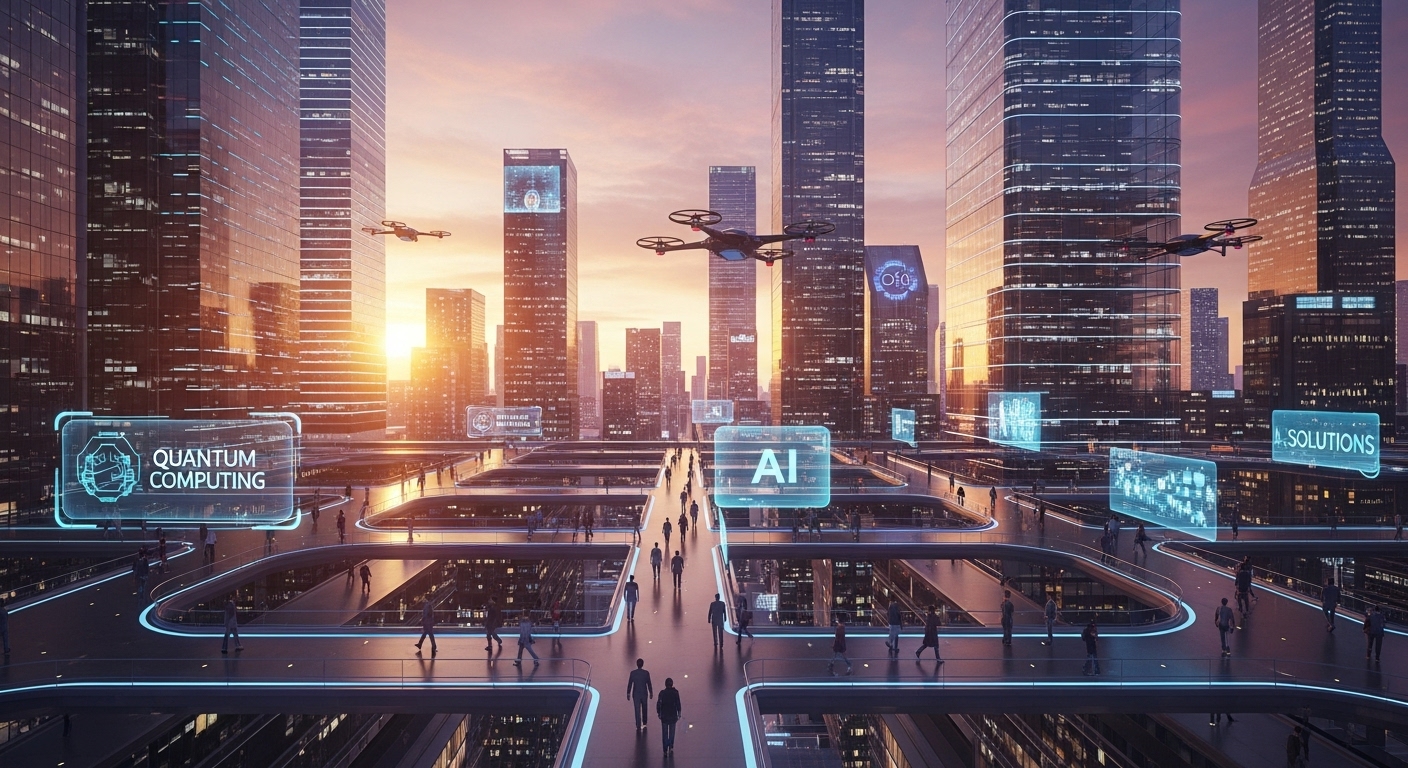
Technology has always been a driving force in human progress, but the last decade has witnessed a seismic shift unlike any other era. Artificial Intelligence (AI), once confined to the pages of science fiction, is now embedded in our daily lives, transforming industries, economies, and the very fabric of society. This blog delves deep into how AI is revolutionizing technology, its practical applications, ethical implications, and what the future may hold.
Understanding Artificial Intelligence
Artificial Intelligence refers to the simulation of human intelligence in machines that are programmed to think, learn, and solve problems. Unlike traditional software that performs specific tasks with explicit instructions, AI systems can analyze data, recognize patterns, and make decisions with minimal human intervention. AI can be categorized into two main types: Narrow AI, which excels in performing specific tasks like speech recognition or recommendation engines, and General AI, a more advanced form that aspires to perform any intellectual task that a human can.
The power of AI lies in its ability to process vast amounts of information rapidly. Machine learning, a subset of AI, allows systems to improve their performance over time through experience. Deep learning, an even more specialized subset, leverages artificial neural networks that mimic the human brain, enabling machines to understand images, interpret language, and even generate creative content.
AI in Everyday Life
While AI may sound complex, its presence in everyday life is more pervasive than most people realize. Virtual assistants like voice-activated home devices, smart recommendations on streaming platforms, and real-time language translation are all powered by AI algorithms. In the financial sector, AI systems monitor transactions for fraudulent activity, predict market trends, and assist in portfolio management. Healthcare has benefited enormously, with AI aiding in early diagnosis, drug discovery, and personalized treatment plans.
Smart cities also leverage AI to optimize traffic flow, reduce energy consumption, and enhance public safety. By integrating AI with Internet of Things (IoT) devices, cities can create an ecosystem where data-driven decisions improve efficiency and sustainability. AI is no longer a distant concept but a practical tool improving efficiency, convenience, and safety in daily life.
AI in Industry and Business
Industries worldwide are undergoing transformation, thanks to AI and automation. Manufacturing processes have become more efficient with predictive maintenance, robotics, and quality control systems powered by AI. In retail, AI-driven analytics help companies understand consumer behavior, optimize inventory, and enhance the customer experience.
The business landscape has also been reshaped by AI-powered data analysis. Companies can now extract actionable insights from massive datasets, allowing for better decision-making, targeted marketing, and improved operational efficiency. AI-powered chatbots and customer service platforms are streamlining interactions, reducing response times, and personalizing the customer experience at an unprecedented scale.
Challenges in AI Adoption
Despite the enormous potential of AI, there are several challenges that organizations and societies face. One of the primary concerns is data privacy. AI systems require vast amounts of data to function effectively, raising questions about how personal information is collected, stored, and used. Ensuring that AI applications comply with privacy regulations and maintain ethical standards is critical.
Bias in AI algorithms is another pressing issue. AI learns from the data it is fed, which can unintentionally perpetuate existing biases present in society. From recruitment software to predictive policing, biased AI can have serious real-world consequences. Addressing this requires transparent algorithms, diverse datasets, and continuous monitoring.
Moreover, the fear of job displacement due to AI automation is prevalent. While AI can automate repetitive tasks, it also creates opportunities for new jobs that require advanced technical skills. Preparing the workforce for this transition through education and training is essential to mitigate the negative impact of automation.
AI and Ethical Considerations
Ethics plays a significant role in shaping the future of AI. As machines gain decision-making capabilities, questions about accountability, fairness, and transparency become increasingly important. Who is responsible if an AI system makes a harmful decision? How can society ensure that AI systems are not used to manipulate or exploit individuals?
Researchers and policymakers are actively working on developing ethical guidelines for AI deployment. Principles such as explainability, fairness, privacy protection, and accountability are being emphasized to ensure that AI serves humanity positively. Transparent AI systems that can justify their decisions are becoming a standard requirement for trust and adoption.
Emerging Trends in AI
Several emerging trends indicate how AI will continue to evolve in the coming years. One notable trend is the rise of AI-driven creativity. From generating realistic artwork to composing music and writing content, AI is increasingly participating in creative processes that were once considered uniquely human.
Another exciting development is the integration of AI with augmented reality (AR) and virtual reality (VR). This combination allows for immersive experiences in gaming, education, and professional training. AI-powered virtual tutors, for instance, can provide personalized learning experiences, adapting content to each student’s needs and learning style.
AI is also making significant strides in natural language processing, enabling machines to understand, interpret, and generate human language with remarkable accuracy. This has profound implications for communication, customer support, and content creation across industries.
The Future of AI
The future of AI promises even more transformative possibilities. General AI, capable of performing complex intellectual tasks, remains a long-term goal, but incremental advancements continue to reshape industries and society. AI-driven automation will redefine workflows, enhance efficiency, and create new business models.
In healthcare, AI could revolutionize disease prevention, early detection, and personalized medicine, potentially saving millions of lives. In environmental management, AI-powered systems could optimize energy use, predict climate changes, and aid in sustainable resource management. The potential of AI is virtually limitless, provided that ethical, social, and technical challenges are addressed responsibly.
Preparing for an AI-Driven World
As AI becomes more integral to society, it is essential for individuals, businesses, and governments to prepare for its impact. Developing digital literacy and technical skills will be crucial for navigating the AI-driven economy. Encouraging interdisciplinary collaboration between technologists, ethicists, and policymakers will help ensure that AI benefits everyone.
Investing in research, fostering innovation, and implementing regulatory frameworks that balance progress with protection are necessary steps to create a sustainable AI ecosystem. Education systems will need to adapt to equip future generations with the skills required to thrive in a world where AI complements human intelligence rather than replaces it.
Conclusion
Artificial Intelligence is no longer a futuristic concept; it is a transformative force shaping our present and future. From improving everyday life to revolutionizing industries, AI has the potential to solve some of humanity’s most pressing challenges. However, with great power comes great responsibility. Addressing ethical considerations, mitigating biases, and preparing society for change are critical to harnessing the full potential of AI.
The rise of intelligent machines marks a new chapter in human history. By embracing AI responsibly and creatively, we can unlock unprecedented opportunities, redefine progress, and shape a future where technology enhances human potential rather than replaces it. The journey is just beginning, and the possibilities are as vast as the human imagination.