Introduction
Cities have always been at the heart of human civilization. From the bustling marketplaces of ancient Mesopotamia to the industrial powerhouses of the nineteenth century, urban centers have driven economic growth, cultural exchange, and technological advancement. Today, humanity faces an unprecedented challenge as urban populations continue to grow at staggering rates. According to global estimates, more than half of the world’s population now lives in cities, and that number is expected to climb even higher in the coming decades. To manage such growth sustainably, efficiently, and equitably, the concept of the smart city has emerged.
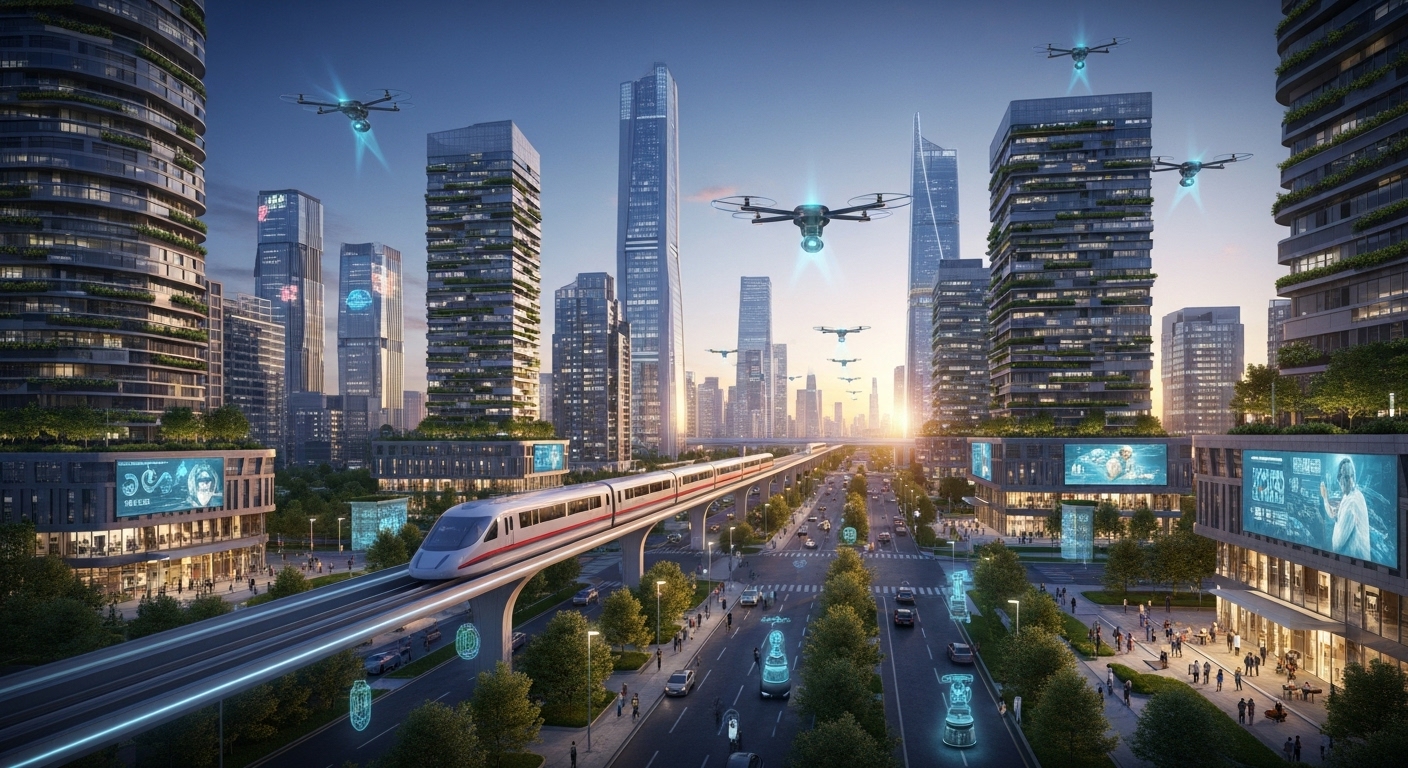
Smart cities are not just about futuristic skylines or advanced gadgets; they represent a reimagining of urban life. They integrate digital technology, data analytics, and sustainable design to improve the quality of life for residents while reducing environmental impact and enhancing efficiency. The rise of smart cities marks one of the most transformative shifts in urban planning and governance in modern history.
Defining the Smart City
At its core, a smart city uses technology and data to solve urban problems and enhance the lives of its citizens. This involves deploying sensors, communication networks, and advanced analytics to monitor and manage everything from traffic flow to energy consumption. A smart city is not defined by a single technology but by a holistic integration of systems that work together to create efficiency, sustainability, and inclusivity.
Smart cities aim to achieve several goals simultaneously. They seek to reduce pollution, improve transportation, optimize resource usage, ensure public safety, and foster economic innovation. More importantly, they strive to make cities livable, responsive, and adaptive to the needs of their residents.
Historical Evolution of Urban Development
The journey toward smart cities can be understood as part of the long evolution of urban development. Early cities emerged as centers of trade and governance, often surrounded by walls for protection. The industrial revolution brought about mass migration to urban areas, leading to overcrowding, pollution, and new challenges for infrastructure. In the twentieth century, cities adopted modern planning principles with roads, electricity grids, and public services.
The twenty-first century introduced the digital revolution. With the rise of the internet, mobile technology, and big data, cities began to explore how information could be used to manage resources more effectively. The concept of a smart city emerged from this digital transformation, combining urban planning with cutting-edge technology to address the growing complexity of urban life.
Key Components of a Smart City
The rise of smart cities is characterized by a combination of several interconnected components.
Smart Infrastructure
Infrastructure is the backbone of a city, and in smart cities, it becomes digital and connected. Roads can be embedded with sensors to detect traffic conditions. Buildings are constructed with energy-efficient designs and automated systems that monitor electricity and water use. Public utilities can be managed in real-time to reduce waste and enhance reliability.
Smart Transportation
Transportation is one of the most critical aspects of urban living. Smart cities use real-time traffic monitoring, adaptive traffic lights, and intelligent public transportation systems to reduce congestion and emissions. Ride-sharing platforms, electric vehicles, and autonomous cars are increasingly integrated into the urban fabric. Many cities also focus on encouraging cycling and walking by developing safe and sustainable infrastructure.
Smart Energy and Environment
Sustainability is at the heart of the smart city vision. Renewable energy sources such as solar panels and wind turbines are integrated into urban power grids. Smart meters allow residents and businesses to track energy consumption. Waste management systems use data to optimize collection routes and recycling processes. Green spaces and urban farming initiatives are incorporated to improve air quality and promote biodiversity.
Smart Governance
Governance in smart cities emphasizes transparency, participation, and efficiency. Digital platforms allow citizens to report problems, access services, and participate in decision-making. Governments use data to anticipate issues such as water shortages, crime patterns, or healthcare needs. By relying on open data initiatives, citizens can hold authorities accountable and actively contribute to improving their communities.
Smart Economy
Smart cities are also economic engines. By fostering innovation hubs, digital entrepreneurship, and high-tech industries, these cities attract investment and create jobs. They emphasize digital skills development and create environments where start-ups and multinational companies can collaborate. The smart economy thrives on knowledge, creativity, and connectivity.
Smart Living and Social Services
Smart cities are ultimately about people. They use technology to improve education, healthcare, and housing. Digital classrooms, telemedicine, and affordable housing initiatives are part of this vision. Safety is enhanced through predictive policing and emergency response systems powered by data. Accessibility is also prioritized so that all citizens, regardless of ability, can benefit from urban life.
Examples of Smart Cities Around the World
Several cities across the globe have already embraced the smart city model, each in unique ways.
Singapore is often hailed as a pioneer. Its Smart Nation initiative integrates data analytics into traffic management, public housing, and healthcare. Barcelona has adopted smart lighting, waste management, and digital citizen platforms. Amsterdam uses an open innovation model, encouraging businesses and residents to participate in smart projects. Dubai is building futuristic smart city districts powered by renewable energy and advanced connectivity.
Each example demonstrates that while technology plays a crucial role, the success of smart cities lies in tailoring solutions to local needs and involving communities in shaping their future.
The Role of Data in Smart Cities
Data is the lifeblood of smart cities. Sensors placed throughout urban areas collect information on traffic, air quality, energy consumption, and more. This data is analyzed in real-time to inform decisions and anticipate problems.
For instance, predictive analytics can help identify which areas are most prone to flooding during heavy rains, allowing authorities to respond proactively. Transportation data can be used to reroute buses or trains to meet demand. Healthcare data can help track the spread of diseases and allocate resources efficiently.
However, data also brings challenges such as privacy and security. Smart cities must ensure that data is collected ethically, stored securely, and used responsibly. Trust between governments and citizens is essential for the success of smart initiatives.
Benefits of Smart Cities
The rise of smart cities brings numerous benefits. They can reduce energy consumption and greenhouse gas emissions, helping combat climate change. They can make transportation faster, safer, and more efficient. They can enhance public safety and improve response times during emergencies.
Smart cities also foster inclusivity by giving citizens a voice in governance and ensuring access to essential services. By leveraging technology, they make life more convenient and connected, allowing people to focus on creativity, productivity, and well-being.
Challenges Facing Smart Cities
Despite the promise, building smart cities is not without obstacles.
Cost and Investment
Developing the infrastructure for smart cities requires significant investment. Not all municipalities have the resources to deploy advanced technologies or maintain them. Balancing innovation with affordability is a major challenge.
Privacy and Security
With the massive amounts of data collected, concerns about surveillance and data misuse are common. Citizens worry about how their personal information is stored and who has access to it. Ensuring cybersecurity and protecting privacy are critical.
Inequality
Smart cities risk widening inequalities if technology is not accessible to everyone. The digital divide, where some groups lack access to internet or devices, can exclude vulnerable populations from the benefits of smart initiatives.
Complexity of Integration
Cities are complex systems, and integrating new technologies with old infrastructure is often difficult. Coordination between government agencies, businesses, and communities is required, and such collaboration is not always easy to achieve.
The Future of Smart Cities
The future of smart cities is deeply intertwined with the development of emerging technologies. Artificial intelligence will make data analysis more sophisticated, enabling predictive and adaptive solutions. The Internet of Things will expand connectivity across devices, creating even more integrated systems. Renewable energy innovations will help cities reduce their carbon footprints.
In the future, cities may become even more decentralized, with neighborhoods acting as semi-autonomous units powered by local energy grids and data systems. Urban farming, green architecture, and circular economies could redefine the relationship between humans and nature within cities.
Global cooperation will also play a role, as cities share best practices and technologies. The rise of smart cities is not confined to wealthy nations; developing countries are also adopting smart solutions to leapfrog traditional infrastructure challenges.
Cultural and Social Impact
Beyond technology, smart cities have cultural and social implications. They change how people interact with their environments, each other, and their governments. They foster new forms of community engagement, creativity, and identity. By making cities more livable, they can strengthen social bonds and encourage cultural diversity.
However, there is also a risk of over-reliance on technology, where human connections and traditional ways of life are overshadowed. Balancing efficiency with humanity will be one of the central challenges in the evolution of smart cities.
Conclusion
The rise of smart cities is one of the defining narratives of the twenty-first century. Driven by the need for sustainability, efficiency, and inclusivity, smart cities combine technology, governance, and community engagement to reimagine urban living. They represent both a solution to the pressing challenges of urbanization and an opportunity to create healthier, safer, and more vibrant communities.
While challenges such as cost, inequality, and privacy must be addressed, the momentum behind smart cities is undeniable. As technology continues to advance, smart cities will evolve further, transforming not only the way we live but also how we connect, work, and envision the future.
The story of smart cities is ultimately the story of human innovation and resilience. Just as past generations built the great cities of history, our generation has the opportunity to shape the cities of tomorrow—smart, sustainable, and inclusive hubs that reflect the best of human potential.