Introduction: A World Defined by Technology
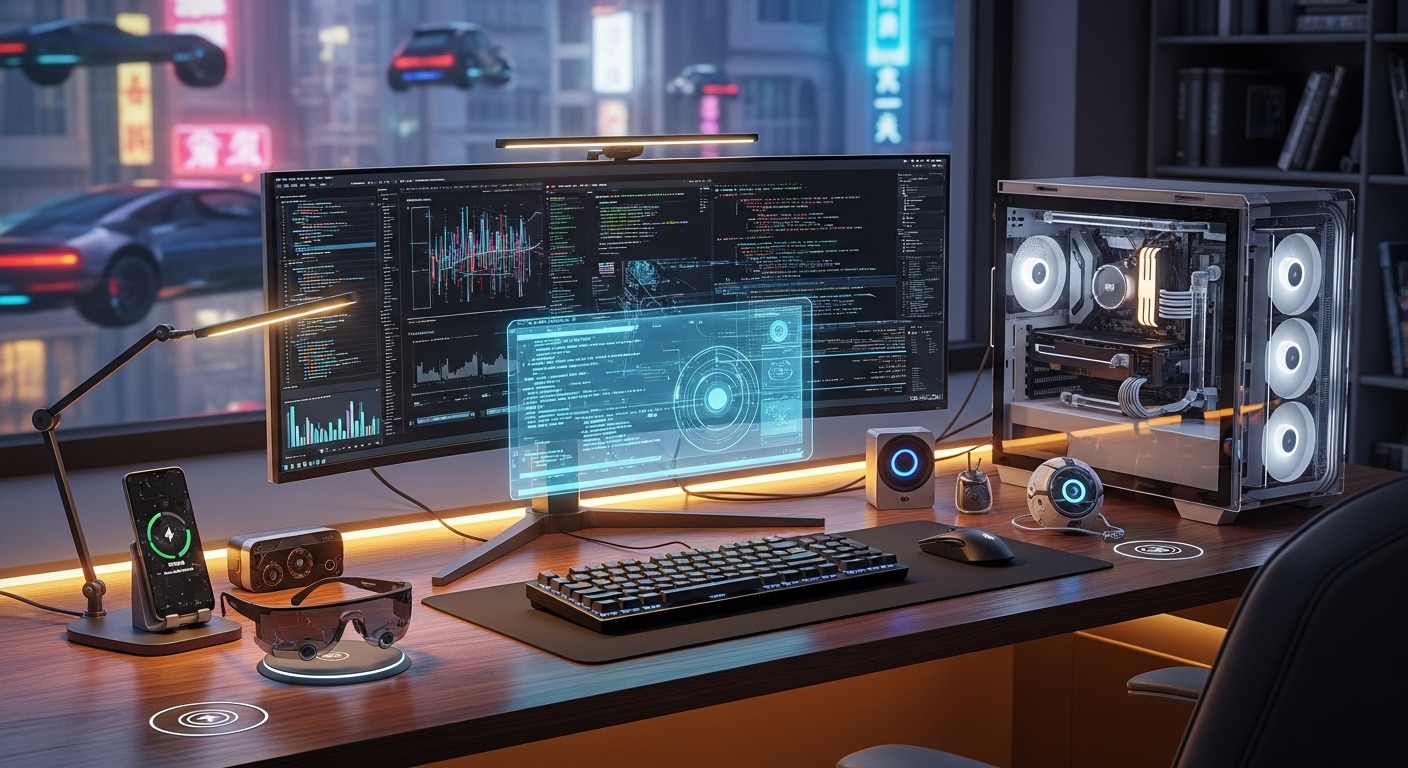
In the last few decades, technology has transformed from a supporting tool into the backbone of human civilization. From the moment we wake up and check our smartphones to the instant we fall asleep listening to an AI-curated playlist, technology surrounds and influences nearly every action we take. It drives economies, reshapes education, and alters the fabric of our relationships.
The evolution of technology is more than a sequence of inventions; it is a continuous story of human ambition — a quest to build tools that extend our minds, bodies, and communities. In this blog, we will explore the evolution of technology, how it redefines industries, the rise of artificial intelligence, the dawn of quantum computing, and the ethical challenges that come with it all.
The Roots of Modern Technology
To understand where we are, we must first understand where we came from. The story of modern technology begins not in the 21st century, but in the industrial revolutions that preceded it.
The First Wave: Mechanization
The Industrial Revolution in the 18th century introduced machines powered by steam and coal. For the first time, production was no longer bound by human muscle. The spinning jenny, the steam engine, and the mechanized loom revolutionized industries, transforming agriculture-based societies into industrial powerhouses.
This era was about physical strength and efficiency. Machines multiplied human labor, allowing nations to produce goods on a massive scale. But communication and computation — the backbone of the modern era — were still in their infancy.
The Second Wave: Electricity and Mass Production
By the late 19th and early 20th centuries, electricity became the new force of progress. The world saw the rise of telegraphs, telephones, and early computers like the ENIAC. Assembly lines, pioneered by innovators like Henry Ford, laid the foundation for the concept of scalability that drives today’s tech companies.
Electricity also brought the birth of home technology — light bulbs, radios, and later, televisions — marking the beginning of the connected home.
The Third Wave: The Digital Dawn
The mid-to-late 20th century introduced the digital age. Transistors replaced vacuum tubes, and computers shrank from room-sized machines to desktop devices. The invention of the microprocessor in 1971 transformed computing forever.
In the following decades, companies like Apple, IBM, and Microsoft revolutionized accessibility, bringing computing to schools, offices, and homes. What was once a scientific instrument became a personal companion — the beginning of a new digital culture.
The Internet Era: The Global Web of Connection
The creation of the internet was not a single event but a series of innovations that converged over time. Initially developed for military communication, it evolved into the most powerful communication network in human history.
The Rise of the World Wide Web
In the early 1990s, the web became public, and the world changed overnight. Information that once took days or weeks to access was suddenly available in seconds. Search engines, email, and online forums reshaped the way humans shared ideas.
The first dot-com boom of the late 1990s laid the groundwork for the digital economy. It wasn’t just about technology anymore — it was about connectivity. Businesses began moving online, and the idea of a global marketplace took root.
The Age of Smartphones and Mobile Computing
If the internet connected the world, smartphones personalized that connection. The launch of the iPhone in 2007 redefined what it meant to be online. The device combined communication, computing, entertainment, and photography into a single portable experience.
Apps became the new storefronts of the digital economy. Companies like Uber, Instagram, and TikTok emerged, reshaping how we live, socialize, and consume media.
The Cloud Revolution
Cloud computing liberated data from physical hardware. Instead of saving information on local drives, people began storing it online, accessible anywhere, anytime. This not only enabled remote work but also gave birth to entire industries around digital collaboration and virtual infrastructure.
Today, businesses run their operations through cloud-based platforms. From small startups to global corporations, the cloud powers the invisible systems that keep the digital world running.
Artificial Intelligence: The New Brain of Technology
No discussion about modern technology is complete without exploring the impact of artificial intelligence. Once confined to science fiction, AI has become a tangible reality that powers everything from digital assistants to complex data analysis systems.
From Algorithms to Intelligence
AI began as an academic pursuit to mimic human reasoning. Early models were simple, rule-based systems designed to perform logical operations. But the real breakthrough came with machine learning — the ability of algorithms to learn patterns from data rather than being explicitly programmed.
With the explosion of data in the 21st century, AI systems became more sophisticated. Deep learning, a subset of machine learning, allowed machines to process images, understand speech, and even generate creative text.
AI in Everyday Life
AI now permeates daily life in subtle and profound ways. Recommendation engines on streaming platforms predict what you’ll watch next. Voice assistants understand natural language. Algorithms detect diseases from medical scans more accurately than some human doctors.
In business, AI optimizes logistics, predicts consumer behavior, and powers automation that saves millions of hours of labor.
The Promise and the Peril
AI’s rise, however, comes with ethical dilemmas. Issues of bias, privacy, and job displacement continue to spark debate. While AI offers tremendous benefits, it also forces humanity to reconsider what intelligence, creativity, and ethics mean in a digital context.
As machines grow more capable, society must find a balance between innovation and responsibility — ensuring that technology serves humanity, not the other way around.
The Data Era: Information as the New Oil
In the 21st century, data has become one of the most valuable commodities on Earth. Every online search, social media post, and digital transaction adds to an ever-growing ocean of information.
The Power of Big Data
Big data refers to the massive, complex datasets that traditional systems cannot easily process. With advanced analytics and AI, organizations can extract insights that drive decisions, forecast trends, and personalize experiences.
For example, health researchers can track disease outbreaks in real-time using data from search engines and social platforms. Retailers can predict buying habits, and cities can design smarter infrastructure to manage traffic and energy consumption.
Privacy in the Digital Age
The abundance of data has also raised concerns about privacy. In exchange for convenience, individuals share intimate details of their lives — often unknowingly. This creates a paradox: the same systems that make life easier can also compromise personal freedom.
Data security, encryption, and digital rights have become defining issues of the modern age. The conversation around who owns data and how it is used will shape the future of technology governance.
Quantum Computing: The Next Great Leap
While most of today’s systems rely on classical computing, a new frontier is emerging — quantum computing. This field harnesses the principles of quantum mechanics to process information in fundamentally new ways.
How Quantum Computing Works
Unlike traditional bits, which can be either 0 or 1, quantum bits (qubits) can exist in multiple states simultaneously. This allows quantum computers to perform complex calculations exponentially faster than classical machines.
Potential applications include drug discovery, cryptography, financial modeling, and climate simulation. Problems that would take classical computers centuries to solve could be completed in seconds.
The Challenges Ahead
Quantum computing is still in its infancy. Maintaining qubit stability and reducing error rates remain major hurdles. But progress is steady, and major tech companies, research institutions, and governments are investing heavily in this field.
When quantum computing becomes mainstream, it could trigger another technological revolution — one that makes today’s supercomputers look primitive.
The Internet of Things (IoT): A Connected World
The Internet of Things refers to the growing network of physical devices connected to the internet — from smart refrigerators to industrial sensors. Each device collects and exchanges data, creating a web of real-time intelligence.
Smart Homes and Cities
In homes, IoT devices automate everyday tasks: adjusting temperature, turning lights on and off, and even managing security systems. In cities, sensors monitor air quality, traffic flow, and energy use, enabling more efficient and sustainable urban living.
Industrial Transformation
In industries, IoT systems predict equipment failures, optimize supply chains, and ensure workplace safety. This level of connectivity blurs the line between digital and physical worlds, marking a new era of human-machine collaboration.
The Future of Work: Automation and Human Adaptation
Technology is not just changing what we do — it’s changing who we are as workers. Automation, AI, and robotics are redefining jobs across all sectors.
The Rise of Automation
Routine and repetitive tasks are increasingly handled by machines. In manufacturing, robots assemble products with unmatched precision. In logistics, drones and autonomous vehicles streamline delivery systems. Even in creative fields, AI-generated content is becoming commonplace.
Human Skills in the Digital Age
While some jobs disappear, others emerge. The demand for data analysts, cybersecurity experts, AI engineers, and digital marketers continues to grow. Human creativity, emotional intelligence, and critical thinking remain irreplaceable.
The future of work depends on adaptability — the ability to learn, unlearn, and relearn as technology evolves. Lifelong learning is no longer optional; it’s essential for survival in a rapidly shifting landscape.
Ethics and Sustainability in Technology
Technological progress is not inherently good or bad — its impact depends on how it’s used. As innovations accelerate, ethical considerations become more important than ever.
The Moral Responsibility of Innovation
Developers, policymakers, and users all share responsibility for ensuring that technology promotes fairness, transparency, and inclusivity. Bias in algorithms, exploitation of personal data, and misinformation are challenges that require collective accountability.
The Environmental Cost of Progress
Technology also comes with an environmental footprint. Data centers consume vast amounts of energy, and electronic waste continues to grow. However, green technology — from renewable energy systems to biodegradable materials — offers solutions.
The intersection of technology and sustainability will determine whether the digital revolution can coexist with planetary health.
Emerging Frontiers: Biotechnology, Space, and Beyond
The future of technology extends far beyond screens and circuits. Fields like biotechnology, nanotechnology, and space exploration are pushing the boundaries of what’s possible.
Biotechnology and Human Enhancement
Advancements in genetic engineering, prosthetics, and brain-computer interfaces are redefining the limits of the human body. Personalized medicine, powered by AI, allows treatments tailored to individual DNA profiles.
The convergence of biology and technology blurs the line between human and machine — raising profound philosophical questions about identity and ethics.
The New Space Race
Space technology is entering a renaissance. Private companies are leading missions to the Moon and Mars, while satellites enable global communication and observation. The dream of interplanetary travel is no longer confined to science fiction.
This expansion beyond Earth marks humanity’s next great adventure — and technology is the vessel that will take us there.
Conclusion: The Human Spirit Behind the Code
Technology is not destiny; it is a reflection of humanity’s deepest desires — to create, connect, and evolve. Every algorithm, circuit, and invention carries the imprint of human imagination.
As we step into an age of artificial intelligence, quantum computing, and digital interconnectivity, the question is not whether technology will define us, but how we will define technology.
The challenge of the future is not to slow down progress, but to steer it with wisdom, empathy, and foresight. For at the heart of every innovation lies a simple truth: technology is only as powerful as the humanity that guides it.