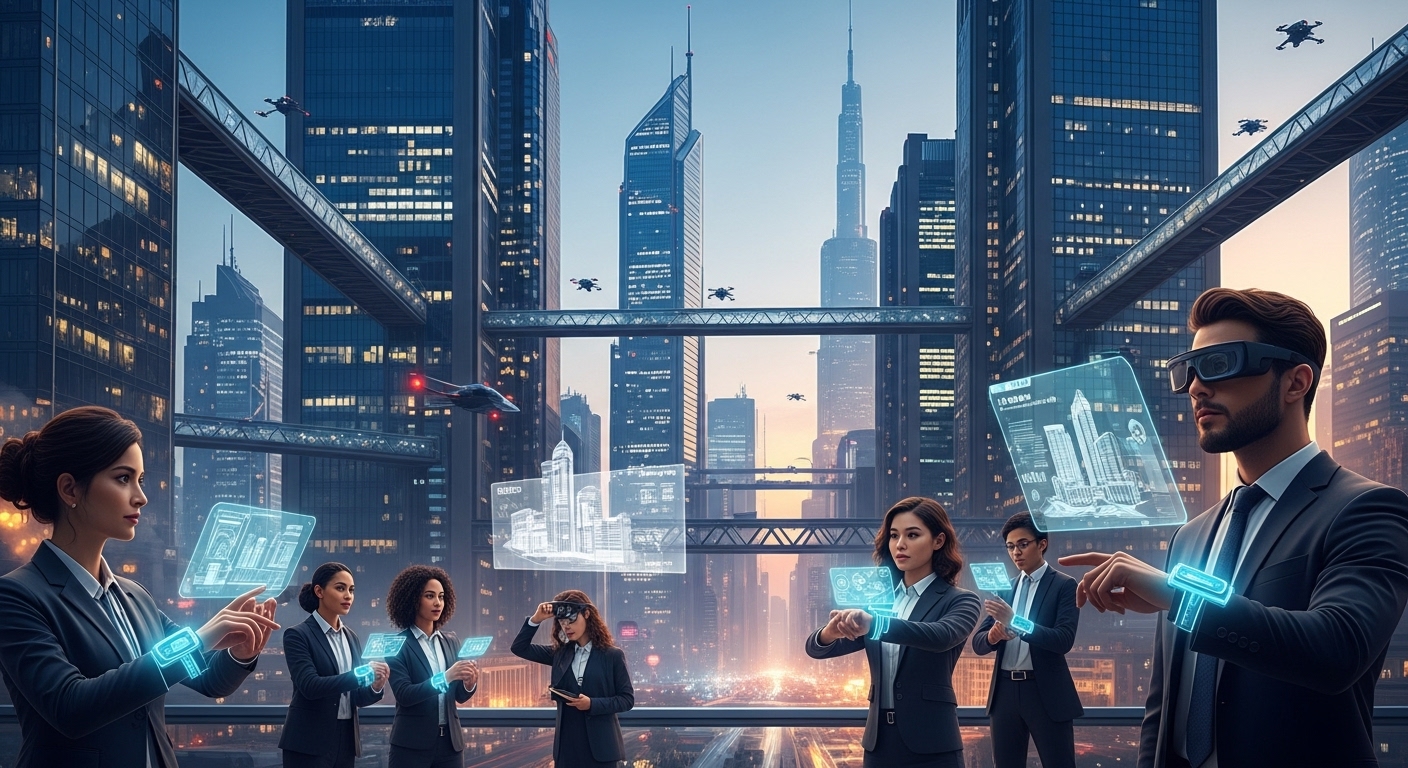
Technology has become the defining force of modern civilization. It shapes the way we live, work, communicate, and even think. From the invention of the wheel to artificial intelligence, humanity’s progress has always been driven by the desire to innovate and improve. Today, technology is no longer just a tool—it is a way of life. It connects billions of people across the globe, powers industries, and influences nearly every aspect of our existence.
In this blog, we will explore how technology has evolved, its impact on different areas of life, and what the future might hold. We will journey through the history of human innovation, examine modern breakthroughs, and understand the role of technology in shaping society.
The Roots of Technological Evolution
The story of technology begins with the earliest humans who used simple tools made of stone and wood. These primitive inventions were the first signs of humanity’s ingenuity. The discovery of fire, the invention of the wheel, and the development of agriculture marked the dawn of civilization.
As societies advanced, so did technology. The ancient Egyptians built pyramids with astonishing precision, the Greeks developed early machines like water clocks, and the Romans engineered aqueducts and roads that still stand today. Each invention solved problems and made life more efficient.
The Industrial Revolution in the 18th century was the next great leap. Machines replaced manual labor, factories transformed economies, and mass production became possible. Steam engines, textile machines, and later electricity changed the course of history. For the first time, humans had the power to produce on a scale never seen before.
This period laid the foundation for modern technology. The combination of engineering, science, and creativity became the driving force behind continuous innovation.
The Age of Electricity and Communication
The 19th and early 20th centuries witnessed breakthroughs that changed everything. Electricity became a household necessity. Innovators like Thomas Edison, Nikola Tesla, and Alexander Graham Bell revolutionized the world with inventions that powered homes, enabled communication, and created industries.
The telephone connected distant people, while radio brought information and entertainment to millions. Later, the invention of television changed how people consumed media, transforming global culture. Electricity not only powered machines but also illuminated the world, extending human activity beyond daylight hours.
Communication technology grew rapidly. Telegraphs, phones, and broadcasting made the world feel smaller. Information that once took days or weeks to travel could now move across continents in seconds. This new level of connectivity laid the groundwork for the digital age.
The Rise of Computers
The mid-20th century marked the beginning of the computer revolution. Initially developed for complex calculations during World War II, computers quickly evolved into powerful machines capable of handling various tasks. Early models like ENIAC and UNIVAC were massive, filling entire rooms, but their potential was undeniable.
By the 1970s, personal computers began entering homes and offices. Companies like IBM, Apple, and Microsoft made computing accessible to everyday people. The microprocessor—an invention that condensed computing power into a small chip—was a turning point. It enabled compact, affordable, and faster devices that could perform multiple functions.
The 1980s and 1990s saw rapid growth in the software industry. Operating systems, word processors, and spreadsheets became essential tools for business and education. The development of the graphical user interface made computers user-friendly, opening technology to the masses.
Computers changed how people worked, learned, and entertained themselves. They became essential for data management, communication, and creativity, paving the way for the next major revolution—the internet.
The Internet Revolution
Few inventions have transformed humanity as profoundly as the internet. Initially a military project designed for information sharing, it soon became the backbone of global communication. In the early 1990s, the World Wide Web made the internet accessible to the public, sparking an explosion of connectivity.
The internet revolutionized every industry. It enabled instant communication through email, video calls, and messaging apps. It made knowledge universal, giving people access to information like never before. Businesses could operate globally, media could reach billions, and individuals could share their voices with the world.
The digital economy emerged, powered by e-commerce, online advertising, and social platforms. Education and entertainment moved online, while remote work became possible. The internet blurred boundaries between nations and cultures, creating a truly interconnected world.
Today, nearly every aspect of modern life relies on the internet. It powers banking, healthcare, transportation, and government systems. The world has entered an era where digital presence is as important as physical existence.
The Smartphone Revolution
The invention of the smartphone changed technology’s relationship with humanity. Combining computing, communication, and entertainment in a single device, smartphones became an extension of daily life. They replaced cameras, maps, calendars, and even wallets.
The introduction of mobile applications created a new digital ecosystem. With a few taps, users could order food, stream movies, manage finances, or connect with friends across the globe. The convenience of mobile technology reshaped behavior, industries, and social interactions.
Smartphones also revolutionized communication. Social media platforms turned ordinary people into influencers, giving rise to a new form of entertainment and marketing. Mobile technology gave everyone the power to create and share content instantly, changing how stories are told and consumed.
However, this connectivity also introduced challenges—privacy concerns, information overload, and social dependency. The same technology that empowers can also overwhelm, requiring a balance between digital life and well-being.
Artificial Intelligence and Machine Learning
Artificial intelligence (AI) represents the latest frontier in technological evolution. Once confined to science fiction, AI is now part of everyday life. From virtual assistants to predictive algorithms, AI enhances efficiency, decision-making, and personalization.
Machine learning, a subset of AI, allows systems to learn from data and improve over time without explicit programming. This technology powers recommendation systems, fraud detection, medical diagnostics, and autonomous vehicles. AI helps businesses optimize operations, governments improve services, and individuals simplify tasks.
The potential of AI is immense, but so are the ethical considerations. Questions about privacy, bias, and job displacement remain central to discussions about AI’s future. As machines become smarter, humanity must ensure that technology remains a tool for empowerment rather than control.
Cloud Computing and the Data Revolution
The rise of cloud computing transformed how data is stored, accessed, and shared. Instead of relying on physical storage devices, individuals and organizations can now keep their information on remote servers accessible from anywhere.
This shift has made collaboration seamless and scalable. Businesses no longer need massive infrastructure to operate globally. From startups to multinational corporations, cloud technology powers digital transformation.
Data has become the new currency of the digital age. Every click, transaction, and interaction generates valuable information. This data drives insights that influence marketing, healthcare, urban planning, and more. However, the abundance of data also raises privacy and security concerns. Protecting digital information is one of the greatest challenges of the modern era.
The Internet of Things (IoT)
The Internet of Things connects physical devices to the digital world, creating a network where everyday objects communicate and share data. Smart homes, wearable devices, and connected vehicles are all part of this ecosystem.
IoT improves convenience and efficiency. Smart thermostats optimize energy use, fitness trackers monitor health, and connected appliances automate household chores. In industries, IoT enhances logistics, manufacturing, and agriculture through real-time data analysis.
The challenge lies in managing the vast amounts of information IoT generates. Security and interoperability remain critical as billions of devices join the network. Despite these concerns, IoT represents a major step toward a more intelligent, responsive world.
The Rise of Automation and Robotics
Automation is reshaping industries by replacing repetitive tasks with machines and software. From manufacturing lines to self-driving cars, robotics plays an increasing role in modern life. Automation improves precision, reduces costs, and enhances safety, allowing humans to focus on creativity and complex decision-making.
In medicine, surgical robots assist doctors with delicate procedures. In logistics, automated drones and warehouses streamline supply chains. Agriculture benefits from robots that plant, monitor, and harvest crops efficiently.
While automation offers incredible benefits, it also raises concerns about employment and inequality. The key to a balanced future lies in retraining and adapting to a world where humans and machines collaborate rather than compete.
Renewable Energy and Green Technology
As technology advances, so does the awareness of its environmental impact. The rise of renewable energy sources like solar, wind, and hydroelectric power reflects a growing commitment to sustainability. Green technologies aim to reduce carbon emissions and preserve natural resources.
Electric vehicles are transforming transportation, while smart grids improve energy efficiency. Innovations in recycling, waste management, and sustainable materials are creating cleaner, more responsible industries.
Technology is both part of the problem and the solution to climate change. The challenge for the future is to ensure that progress does not come at the expense of the planet.
Cybersecurity and Digital Safety
With technology’s expansion comes the growing threat of cybercrime. Hackers, viruses, and data breaches pose risks to individuals and organizations alike. Cybersecurity has become essential to protecting privacy, finances, and national security.
Modern security systems use encryption, biometrics, and AI to detect and prevent attacks. Yet, as technology evolves, so do the methods of exploitation. Education and awareness are crucial—users must understand how to protect themselves in an increasingly digital world.
Cybersecurity is not just a technical issue; it is a societal one. The safety of digital infrastructure underpins global stability.
The Future of Technology
Looking ahead, technology will continue to evolve at an unprecedented pace. Artificial intelligence will become more intuitive, quantum computing will solve problems once deemed impossible, and biotechnology will merge human biology with digital intelligence.
Virtual and augmented reality will redefine entertainment, education, and communication. The metaverse may become the next major platform for work and play, blending real and virtual experiences.
Ethical questions will grow in importance. Who controls data? How do we balance innovation with privacy and equity? The answers will shape how technology serves humanity in the decades to come.
What remains constant is the human drive to innovate. Each generation builds upon the last, turning imagination into reality. The future of technology is not just about machines—it is about people using those machines to create a better world.
Conclusion
Technology is the greatest story of human achievement. It began with simple tools and evolved into complex systems that define modern life. From electricity to artificial intelligence, every breakthrough reflects humanity’s endless curiosity and creativity.
Yet, with great power comes great responsibility. As technology continues to reshape the world, we must ensure that progress remains inclusive, ethical, and sustainable. The true measure of innovation lies not in how advanced our tools become, but in how they improve the quality of life for all.
In the end, technology is not just about circuits, codes, or machines—it is about connection, empowerment, and transformation. It reflects the best of human potential, constantly pushing boundaries while reminding us that the greatest invention of all is the human mind itself.