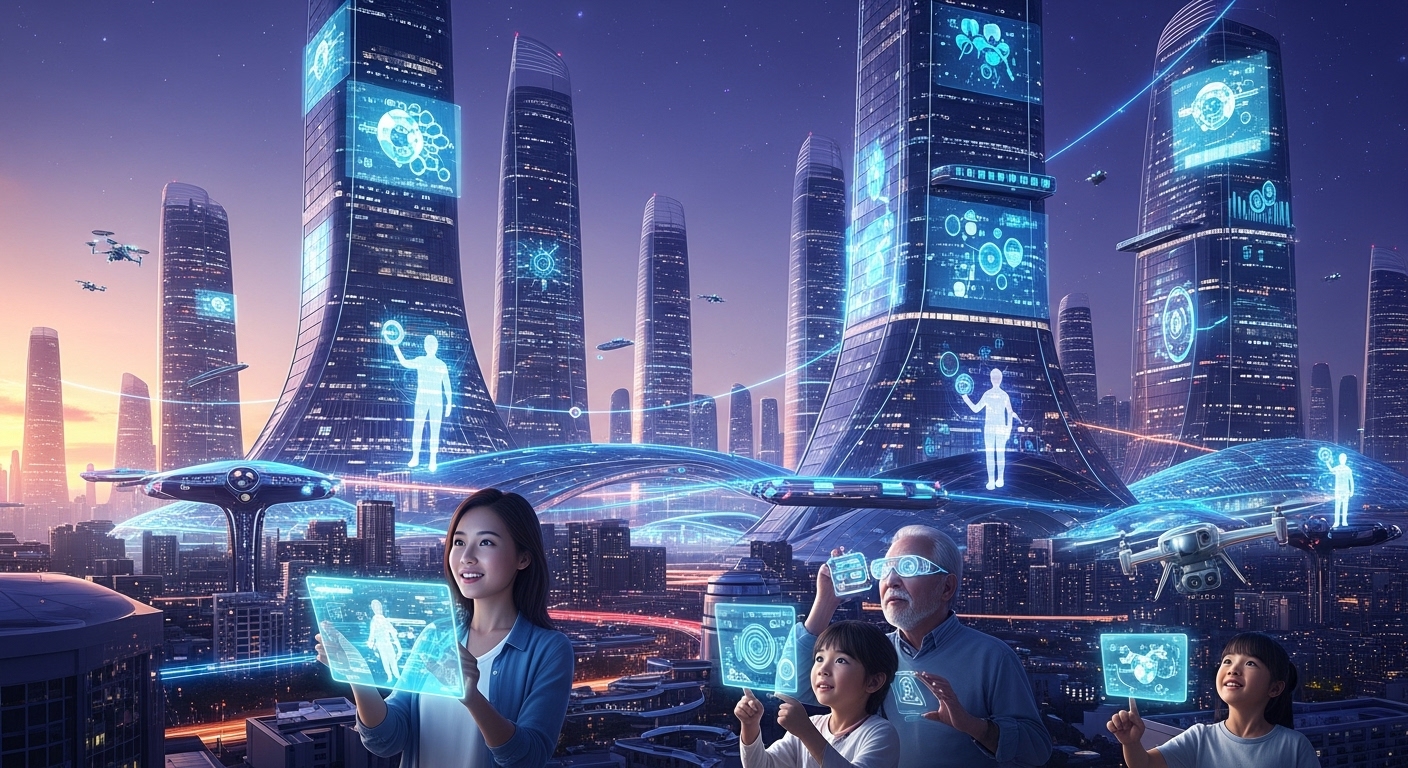
Introduction: Technology as the Driving Force of Change
Technology has become an integral part of human existence, influencing how people live, work, and interact. From the simplest tools in early human history to today’s advanced computing systems, technology has consistently driven progress. Modern society relies heavily on technological innovations to address complex challenges, improve efficiency, and enhance quality of life.
The rapid pace of technological development has transformed industries, economies, and cultures. It affects everything from communication and education to healthcare, entertainment, and transportation. The interconnected nature of technology means that advances in one sector often ripple through others, creating unprecedented opportunities and challenges. Understanding the role and impact of technology is essential for navigating the contemporary world and preparing for future developments.
This blog explores the evolution of technology, its current applications, and its future potential, highlighting the ways it reshapes society, drives innovation, and challenges conventional boundaries.
The Evolution of Technology: From Simple Tools to Advanced Systems
The history of technology spans thousands of years, beginning with early tools and techniques that enabled humans to survive and adapt. Stone tools, fire, and simple machines marked the first steps toward human innovation. These inventions laid the foundation for more complex technologies that would eventually transform societies.
The Industrial Revolution in the 18th and 19th centuries was a turning point. Mechanized production, steam engines, and the rise of factories reshaped economies and social structures. Technological innovation drove urbanization, economic growth, and new forms of labor organization, demonstrating the transformative power of technology on society.
The 20th century saw the rise of electronics, computing, and telecommunications. The invention of the transistor, integrated circuits, and microprocessors made computers faster, smaller, and more accessible. The emergence of the internet connected people globally, revolutionizing communication, commerce, education, and entertainment. These innovations created a foundation for the digital age and paved the way for artificial intelligence, cloud computing, and smart technologies.
Artificial Intelligence: Redefining Possibilities
Artificial intelligence (AI) has emerged as one of the most influential technologies of the modern era. AI systems simulate human intelligence, allowing machines to process information, learn from data, and make decisions. Applications of AI span numerous industries, transforming how humans solve problems and perform tasks.
In healthcare, AI analyzes medical data, predicts diseases, and assists in diagnosis and treatment planning. AI algorithms can detect patterns in medical imaging and patient records, improving accuracy and efficiency. In finance, AI is used for fraud detection, algorithmic trading, and customer service optimization. Manufacturing industries employ AI-driven automation to enhance production processes, improve quality control, and optimize supply chains.
Machine learning, a subset of AI, allows systems to learn and adapt without explicit programming. Deep learning models enable applications such as image and speech recognition, autonomous vehicles, and predictive analytics. While AI offers vast potential, it also raises ethical considerations, including biases in decision-making, privacy concerns, and workforce displacement.
The Internet of Things: A Connected World
The Internet of Things (IoT) refers to the network of physical devices embedded with sensors and connectivity that enables them to collect and exchange data. IoT is transforming daily life, industrial operations, and urban infrastructure by making objects smarter and more responsive.
In homes, IoT devices include smart appliances, thermostats, security systems, and wearable health monitors. These devices provide convenience, efficiency, and personalization. In industrial settings, IoT enables predictive maintenance, real-time monitoring, and process automation. Smart factories and supply chains benefit from improved productivity and reduced downtime.
Smart cities utilize IoT to manage traffic, monitor environmental conditions, optimize energy consumption, and enhance public safety. By integrating sensors and data analytics, urban planners can make informed decisions and improve quality of life for residents. However, the proliferation of IoT devices raises challenges related to cybersecurity, privacy, and data management.
Cloud Computing: Transforming Data and Collaboration
Cloud computing has revolutionized how data is stored, processed, and accessed. It allows individuals and organizations to use computing resources over the internet, providing scalability, flexibility, and cost efficiency.
Businesses use cloud platforms to manage applications, analyze data, and collaborate across geographic boundaries. Educational institutions utilize cloud services for remote learning, research, and administrative operations. Individuals rely on cloud-based storage, productivity tools, and media streaming services.
Cloud computing also supports advanced technologies such as AI, big data analytics, and machine learning. It enables real-time collaboration, remote work, and global connectivity. Security and data privacy remain significant considerations, as organizations must protect sensitive information while leveraging cloud infrastructure for innovation and efficiency.
Blockchain Technology: Enhancing Security and Transparency
Blockchain is a decentralized ledger technology that allows secure, transparent, and tamper-proof record-keeping. Its most well-known application is cryptocurrency, but its potential extends to multiple industries, including finance, healthcare, logistics, and governance.
Blockchain enables secure transactions without intermediaries, reducing fraud and ensuring trust. In supply chain management, blockchain tracks the provenance of products, ensuring authenticity and accountability. Healthcare applications include secure sharing of patient records and tracking pharmaceutical distribution. Smart contracts automate agreements and transactions, increasing efficiency and reducing human error.
While blockchain provides enhanced security and transparency, challenges such as energy consumption, scalability, and regulatory frameworks must be addressed to achieve widespread adoption.
Virtual Reality and Augmented Reality: Immersive Experiences
Virtual reality (VR) and augmented reality (AR) technologies create immersive digital environments that alter how humans interact with digital and physical spaces. VR offers fully simulated experiences, while AR overlays digital elements onto the real world.
VR is widely used in gaming, education, healthcare, and professional training. Flight simulators, surgical practice, and virtual classrooms allow users to gain practical experience in safe, controlled environments. AR enhances navigation, retail, and industrial applications by providing real-time contextual information.
The entertainment industry leverages VR and AR to provide interactive storytelling, immersive experiences, and new forms of media engagement. As hardware becomes more affordable and software more sophisticated, these technologies are poised to become mainstream in everyday life.
5G Technology: Accelerating Connectivity
The introduction of 5G networks is revolutionizing connectivity, offering faster speeds, lower latency, and the capacity to support millions of devices simultaneously. This advancement enables real-time communication, enhanced streaming, and the expansion of connected technologies.
Consumers benefit from faster mobile internet, smoother streaming experiences, and improved gaming performance. Businesses can deploy large-scale IoT networks, utilize AI-driven analytics, and enhance remote collaboration. Smart cities, autonomous vehicles, and immersive media rely on the high-speed, low-latency capabilities of 5G technology.
The widespread adoption of 5G is expected to drive global digital transformation, foster innovation, and create new economic opportunities across industries.
Technology in Healthcare: Revolutionizing Medicine
Healthcare has been profoundly transformed by technological advancements. Medical devices, AI, telemedicine, and wearable technology have improved diagnosis, treatment, and patient monitoring.
Wearable devices track vital signs, physical activity, and chronic conditions, empowering patients to manage their health proactively. Telehealth platforms allow for remote consultations, expanding access to medical care, especially in underserved regions. AI algorithms assist doctors in analyzing medical data, identifying patterns, and predicting potential health risks.
Robotic surgery, personalized medicine, and digital diagnostics improve accuracy and patient outcomes. Technology not only enhances efficiency in healthcare delivery but also makes it more patient-centered and accessible.
Technology in Education: Learning in the Digital Age
Educational technology has revolutionized learning, enabling access to knowledge regardless of location. Online courses, virtual classrooms, and digital collaboration tools create flexible and interactive learning environments.
AI-driven adaptive learning platforms customize educational content based on individual needs, improving engagement and retention. Virtual reality and simulations provide experiential learning opportunities, allowing students to practice skills safely. Global collaboration is facilitated through digital platforms, connecting students and educators across borders for shared projects and knowledge exchange.
The integration of technology in education prepares learners for the modern workforce, fostering digital literacy, critical thinking, and problem-solving skills essential in the 21st century.
Ethical and Social Implications of Technology
Despite its benefits, technology poses ethical and social challenges. Privacy concerns arise from the extensive collection and analysis of personal data. AI and automated systems may perpetuate biases and affect critical decision-making in law enforcement, finance, and hiring.
Automation and robotics threaten to disrupt labor markets, leading to workforce displacement and economic inequality. Digital addiction, misinformation, cybersecurity threats, and unequal access to technology highlight the need for responsible innovation and regulation.
Ethical frameworks, public policy, and education are essential to ensure that technology serves humanity positively. Transparency, inclusivity, and security must be prioritized to maximize benefits while mitigating risks.
The Future of Technology: Endless Possibilities
The future of technology promises innovation across multiple frontiers. Quantum computing could revolutionize data processing and problem-solving. Biotechnology and genetic engineering offer new possibilities in medicine, agriculture, and environmental management. Space exploration and advanced robotics will expand human capability beyond traditional boundaries.
AI, IoT, blockchain, and immersive technologies will converge, creating interconnected ecosystems that redefine human interaction, productivity, and creativity. Ethical considerations, sustainability, and equitable access will be crucial in shaping the trajectory of technological development.
The integration of these innovations will redefine industries, enhance human experiences, and solve global challenges, driving progress in ways previously unimaginable.
Conclusion: Technology as a Catalyst for Progress
Technology has reshaped the world, transforming the way humans live, work, and interact. From early tools to AI, cloud computing, IoT, VR, AR, and blockchain, it has revolutionized industries, enhanced quality of life, and connected the globe.
Its impact spans healthcare, education, communication, entertainment, and industry, offering unprecedented opportunities for growth, efficiency, and innovation. While challenges such as ethics, privacy, and workforce disruption remain, the transformative potential of technology is undeniable.
As society continues to innovate, technology will remain the driving force behind progress, shaping the present and defining the future. Responsible and creative application of technological advancements will empower humanity, solving complex problems and improving lives worldwide.
Technology is more than a tool—it is a catalyst that drives human achievement, connectivity, and cultural evolution. Its continued advancement will determine how effectively societies adapt, thrive, and shape the future.